Concrete Step Repair
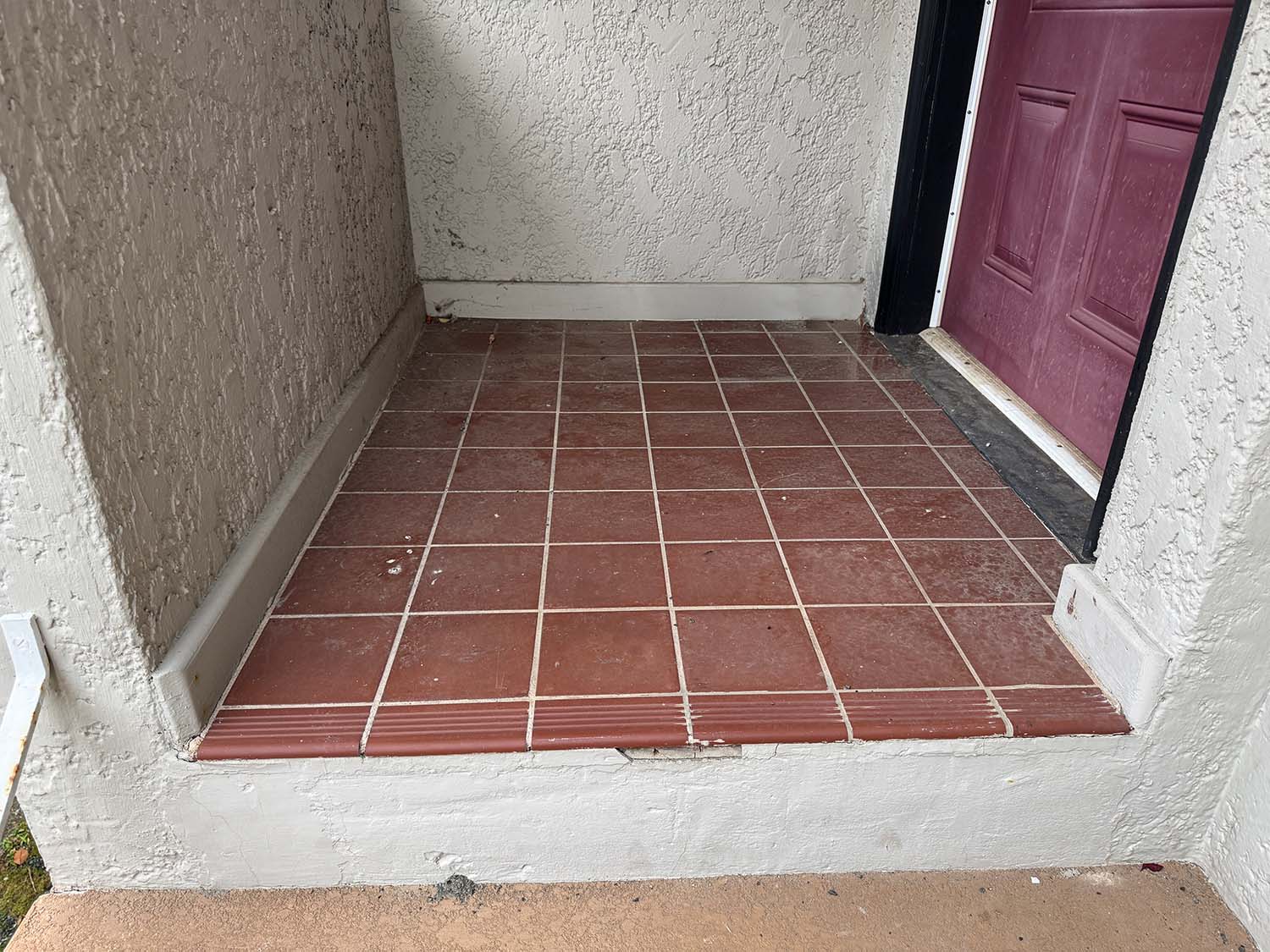
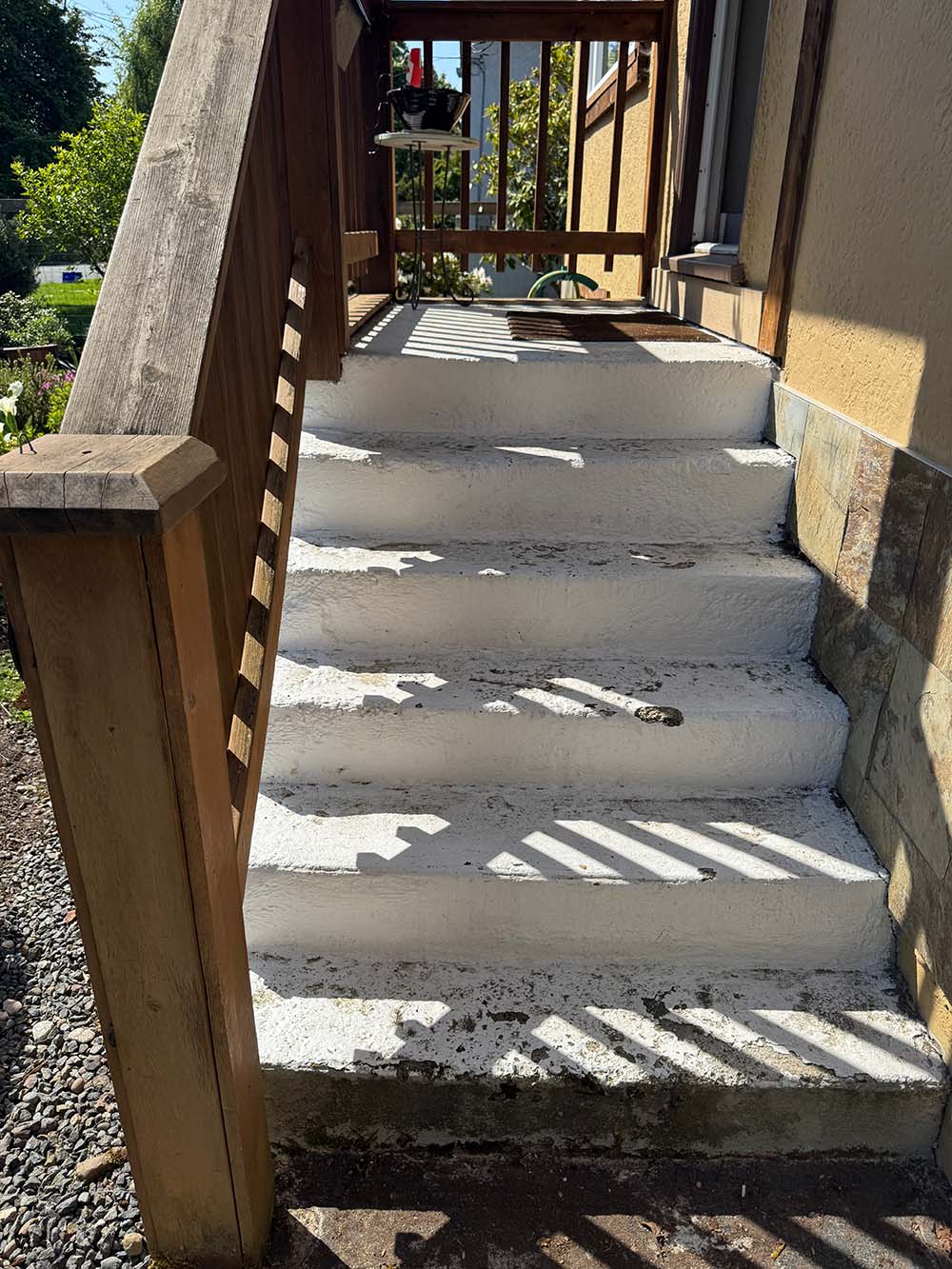
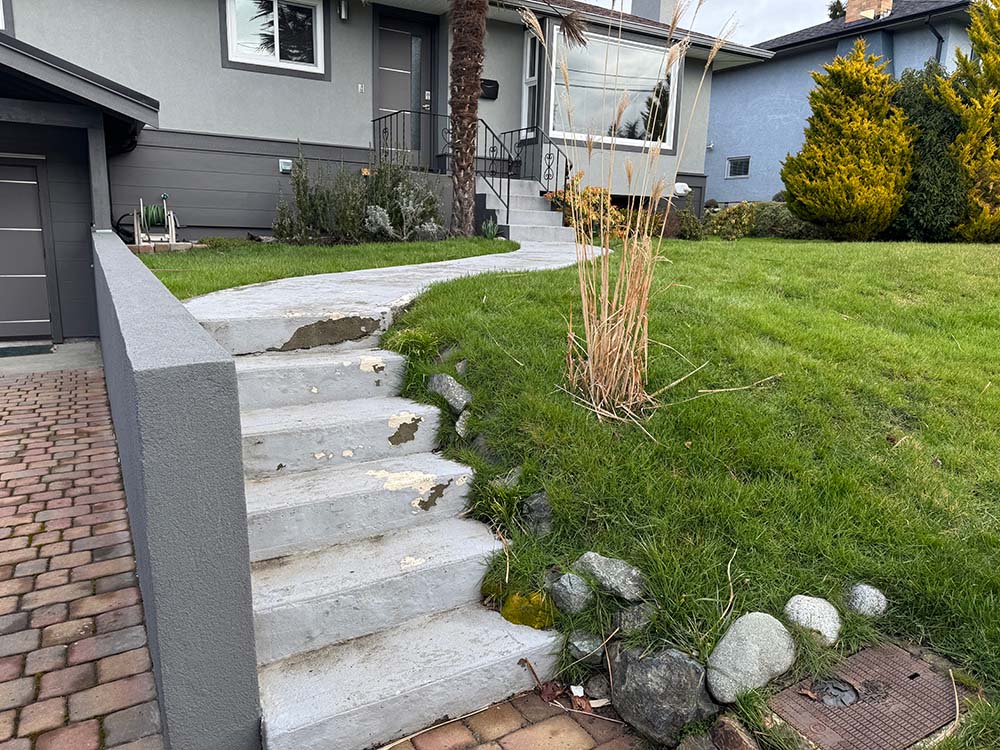
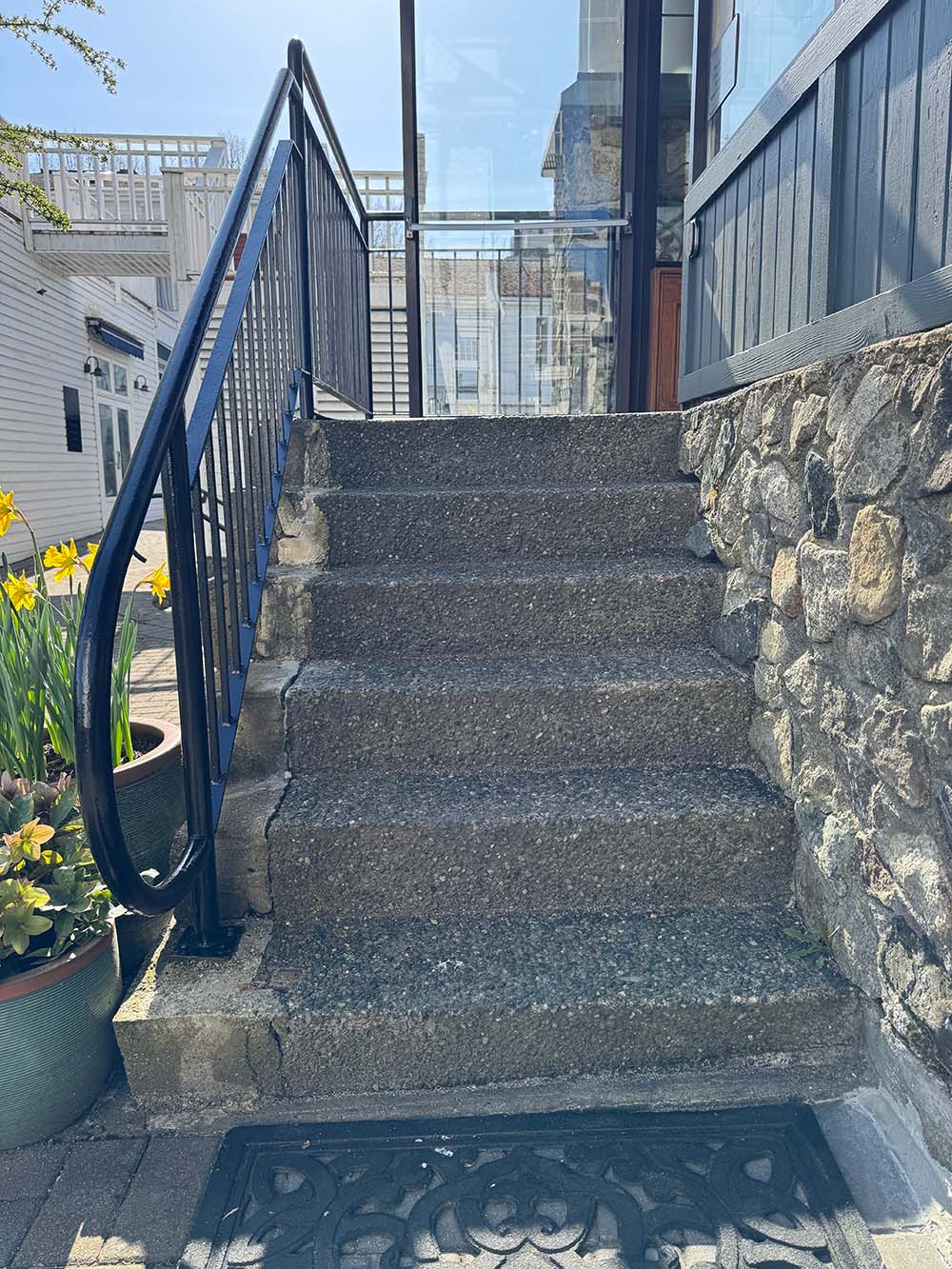
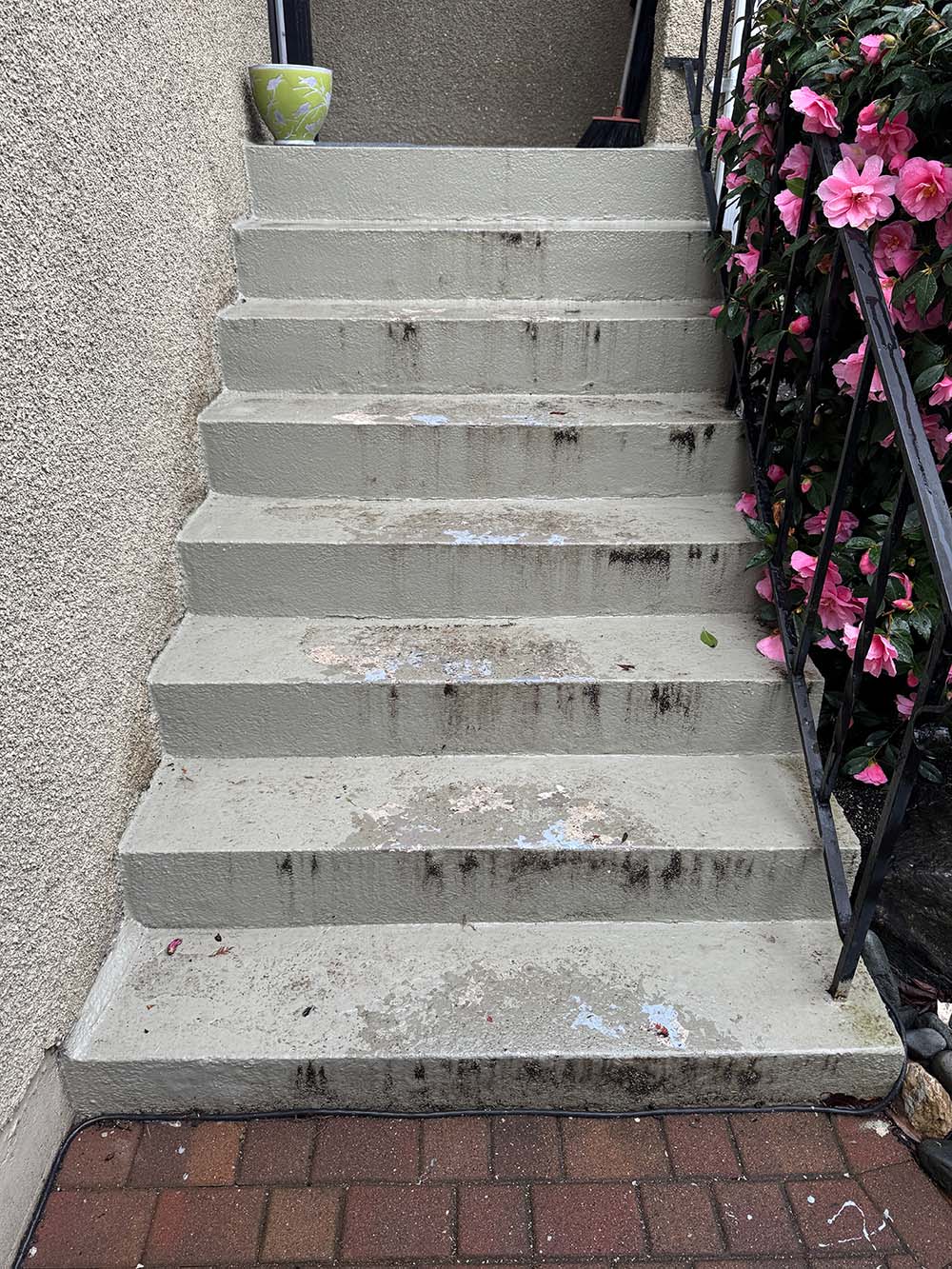
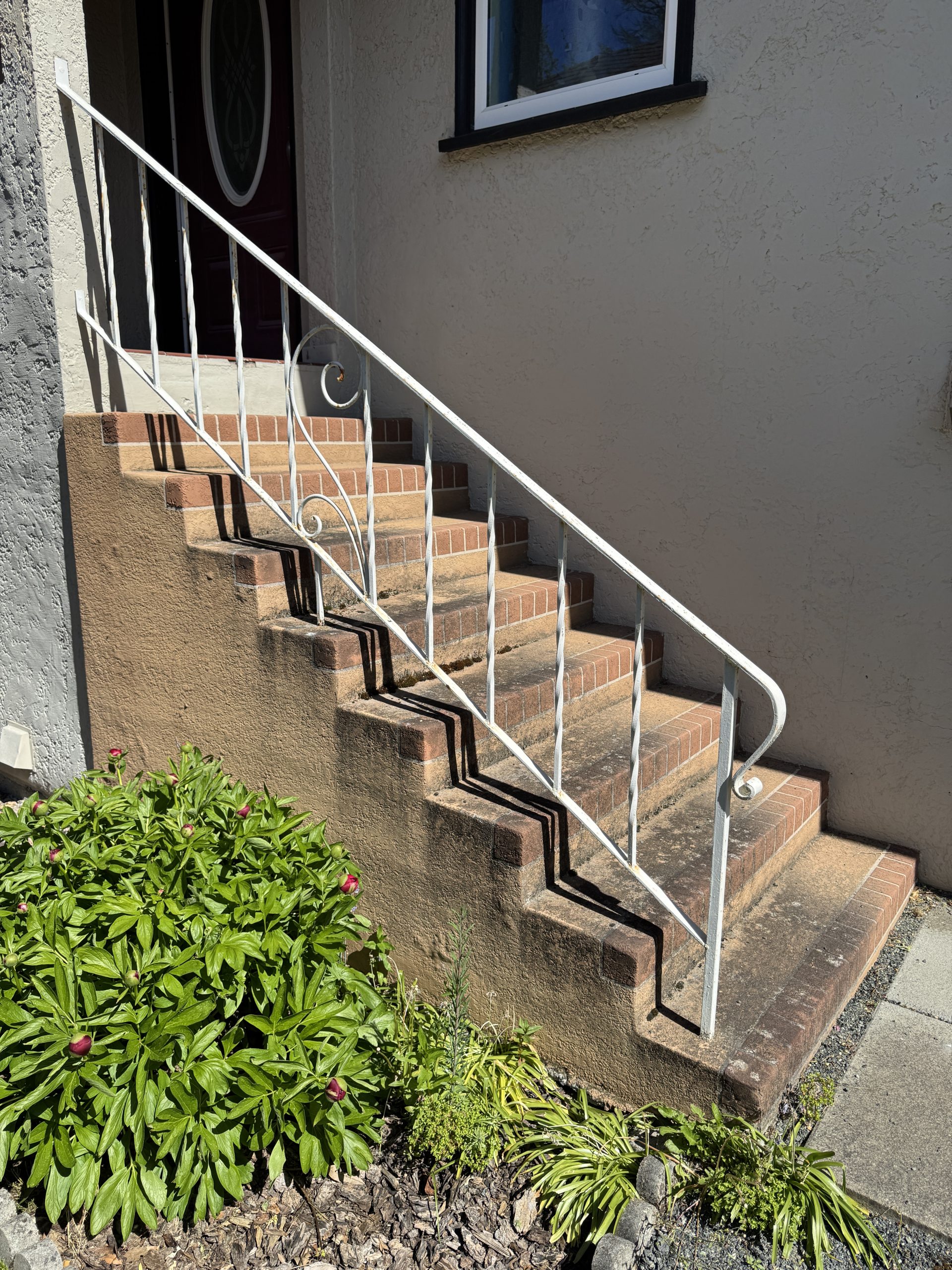
Your entry stairs are one of the most used and exposed parts of your home or building. Over time, concrete begins to show wear. Small surface craters (pitting), scaling, cracks, and flaking edges are all early signs that the material is breaking down.
Left untreated, that deterioration only accelerates.
Before
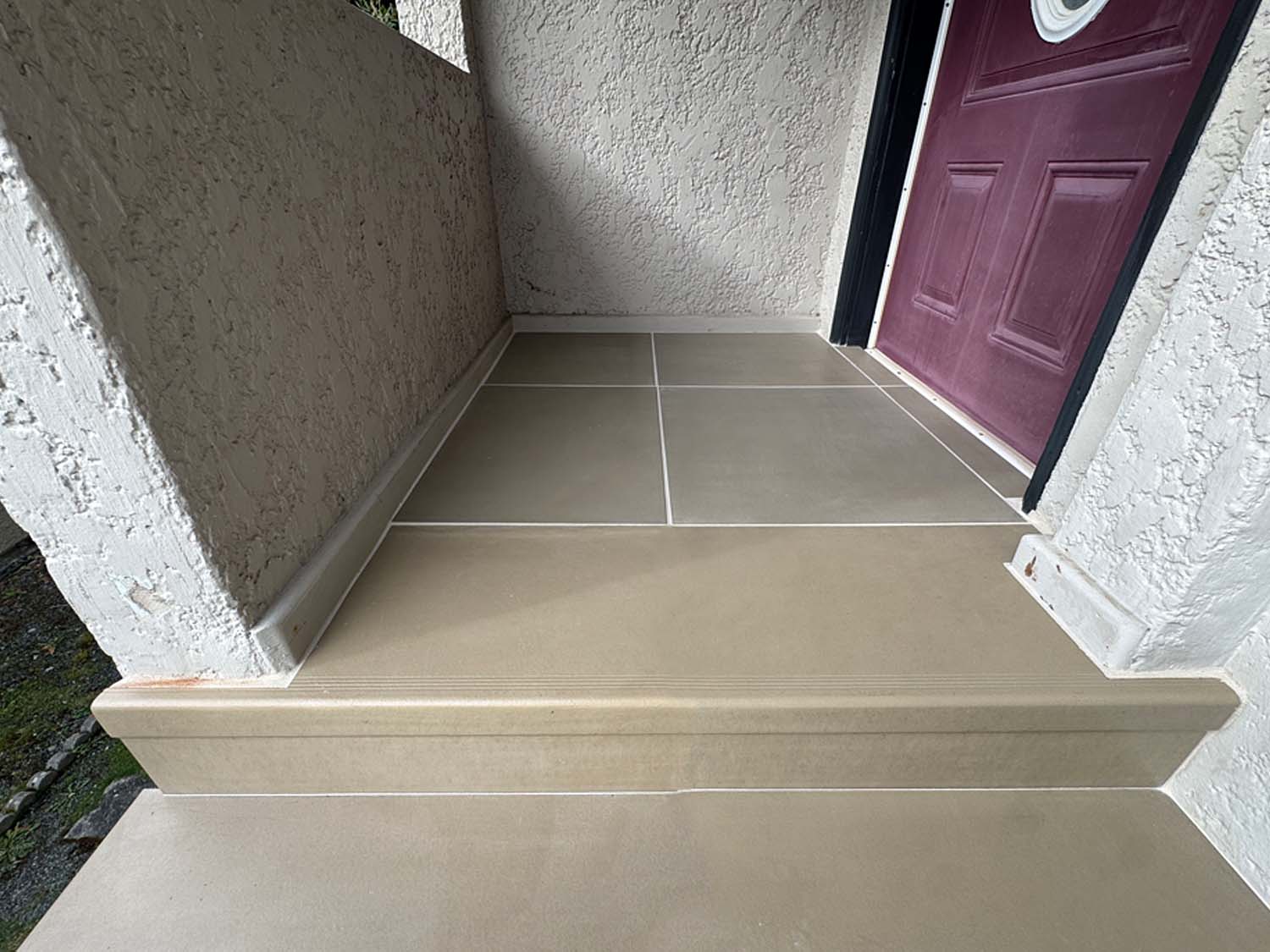
After
Before
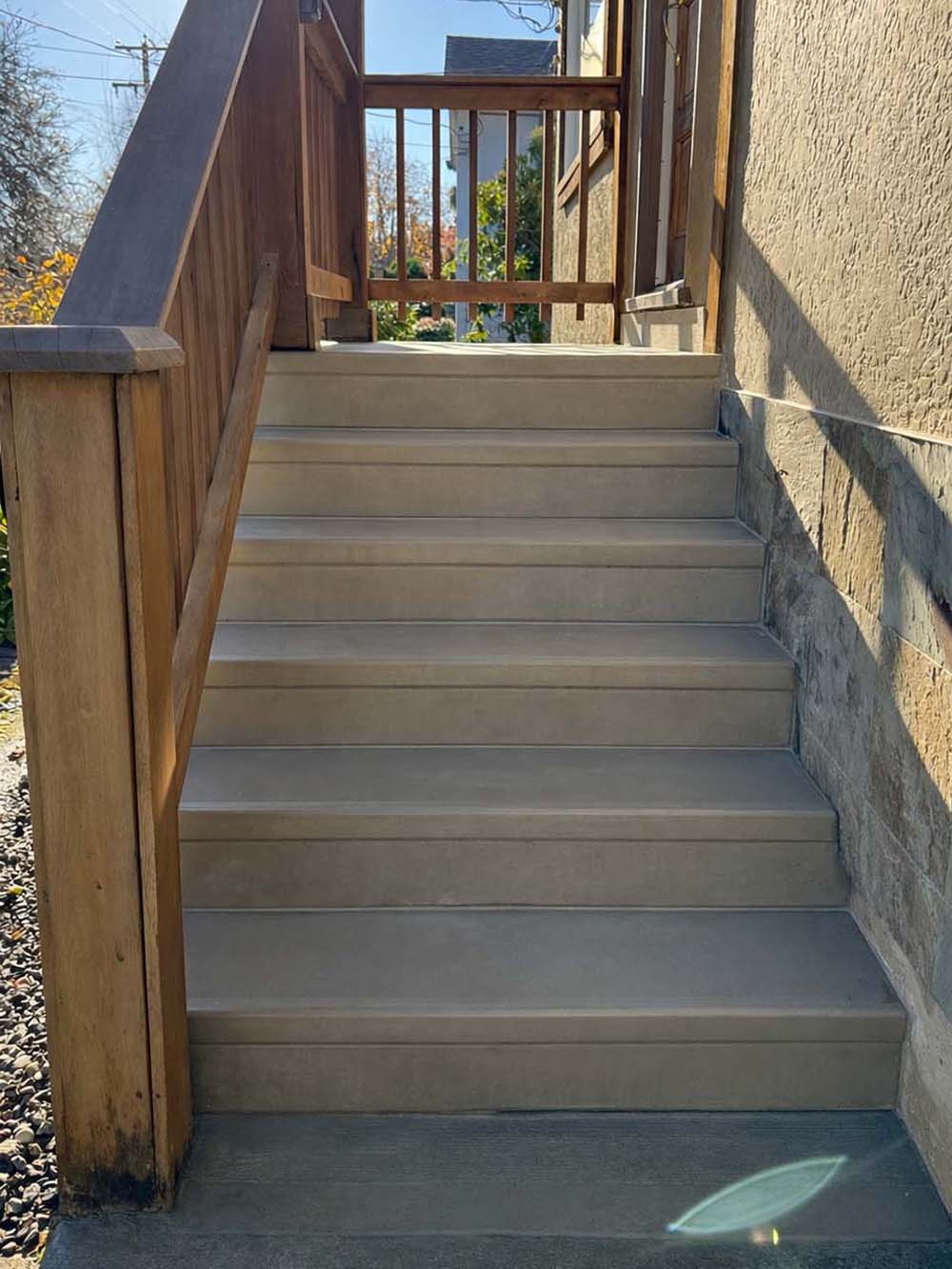
After
Before
After
Before
After
Before
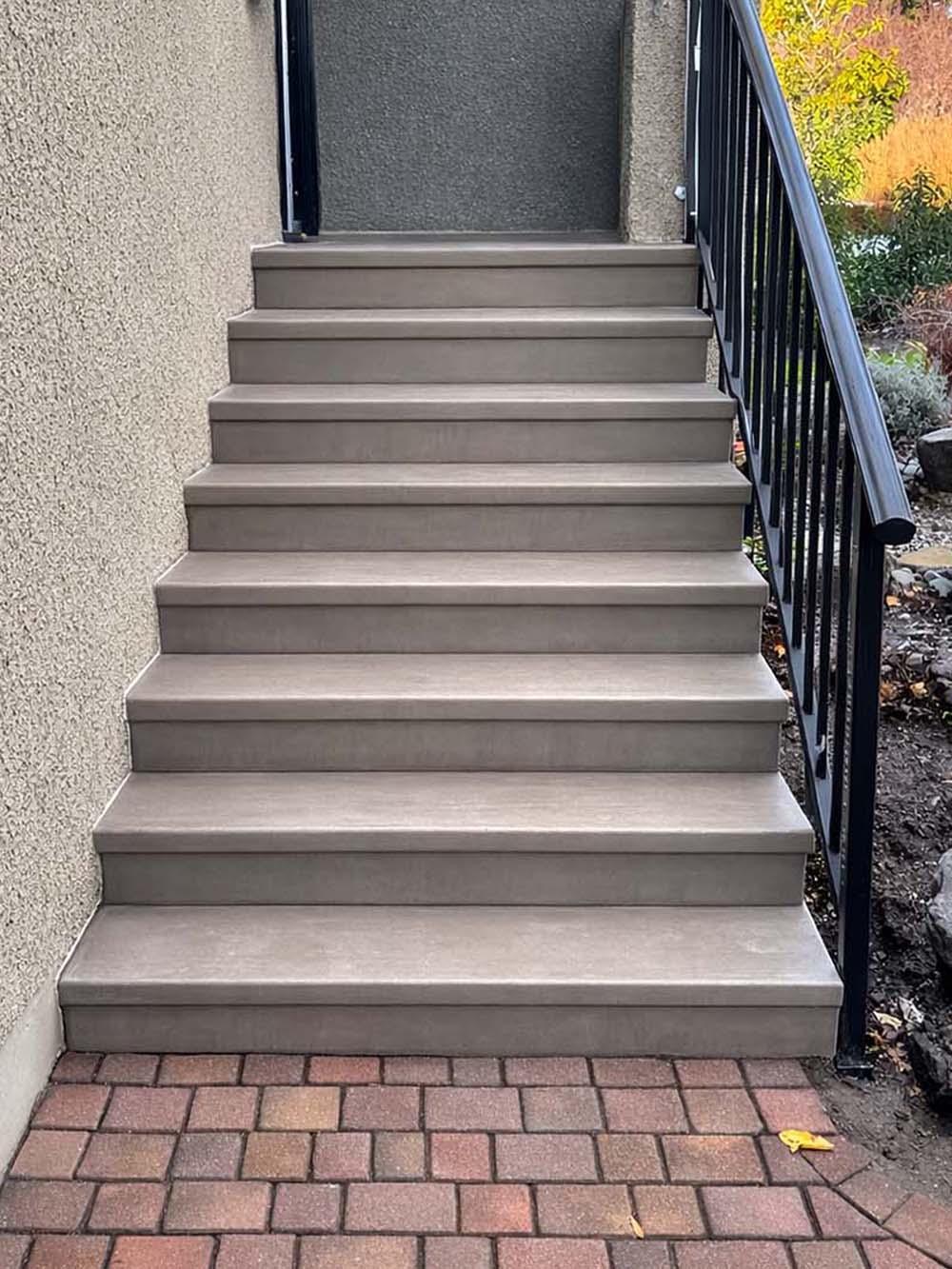
After
Why Concrete Steps Fail
Concrete doesn’t just “get old.” It breaks down from moisture, weather, and corrosion.
Water enters through small pores and hairline cracks. In freeze/thaw conditions, that trapped moisture expands and forces the surface apart. De-icing salts and constant exposure to the elements speed up the deterioration. Daily foot traffic adds further wear.
As moisture works deeper into the concrete, embedded steel reinforcement can begin to corrode. When steel rusts, it expands. That internal pressure causes cracking, delamination, and surface spalling. Edges crumble. The cement paste weakens. Aggregate loosens and starts to fall away.
In many homes, front steps are integrally poured with the foundation, meaning they are structurally connected and form the ceiling of a cold storage area beneath the entry. When cracking and moisture intrusion occur, water can migrate through the concrete into the space below, leading to damp conditions, musty odours, and even mold growth over time.
Common signs of failure include:
- Surface pitting and scaling
- Flaking or spalling concrete
- Cracks that continue to widen
- Exposed or rusting reinforcement
- Loose aggregate and crumbling edges
- Moisture in cold storage areas below
Cosmetic repairs may improve appearance temporarily, but they don’t address ongoing surface deterioration.
Maintenance-Free Step Restoration
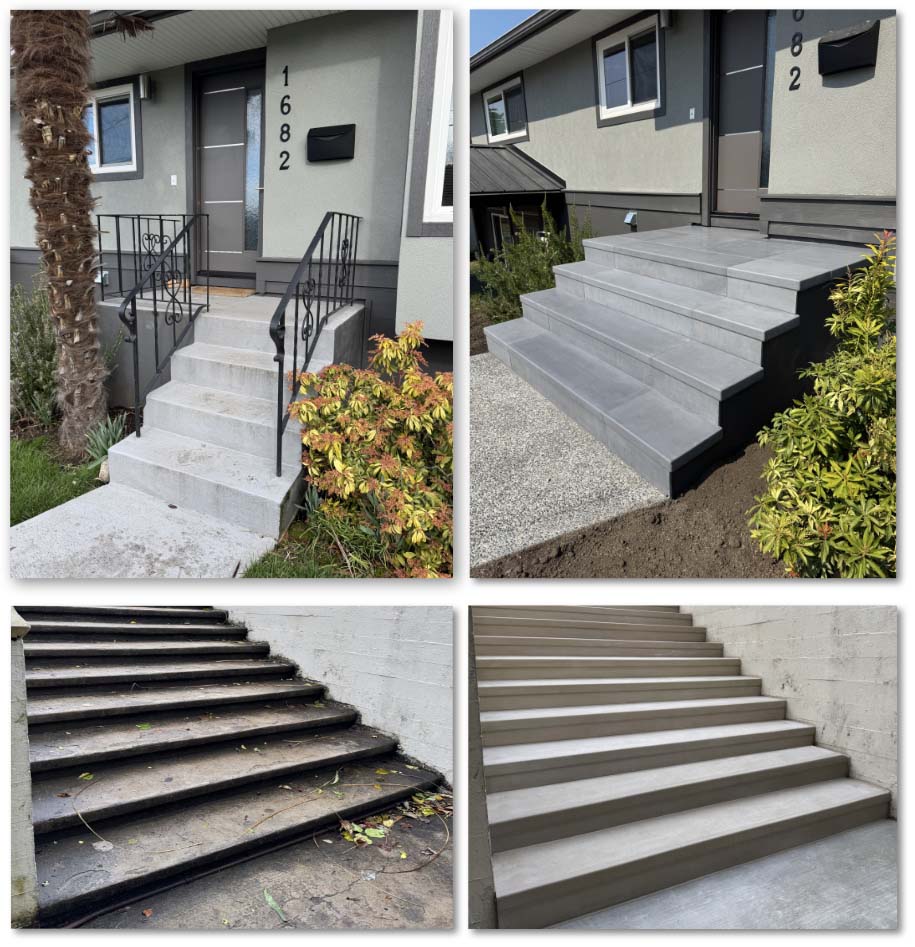
When concrete steps are failing, patching and repainting only buy time. They don’t restore durability. They don’t stop moisture intrusion. And they don’t prevent the surface from continuing to break down.
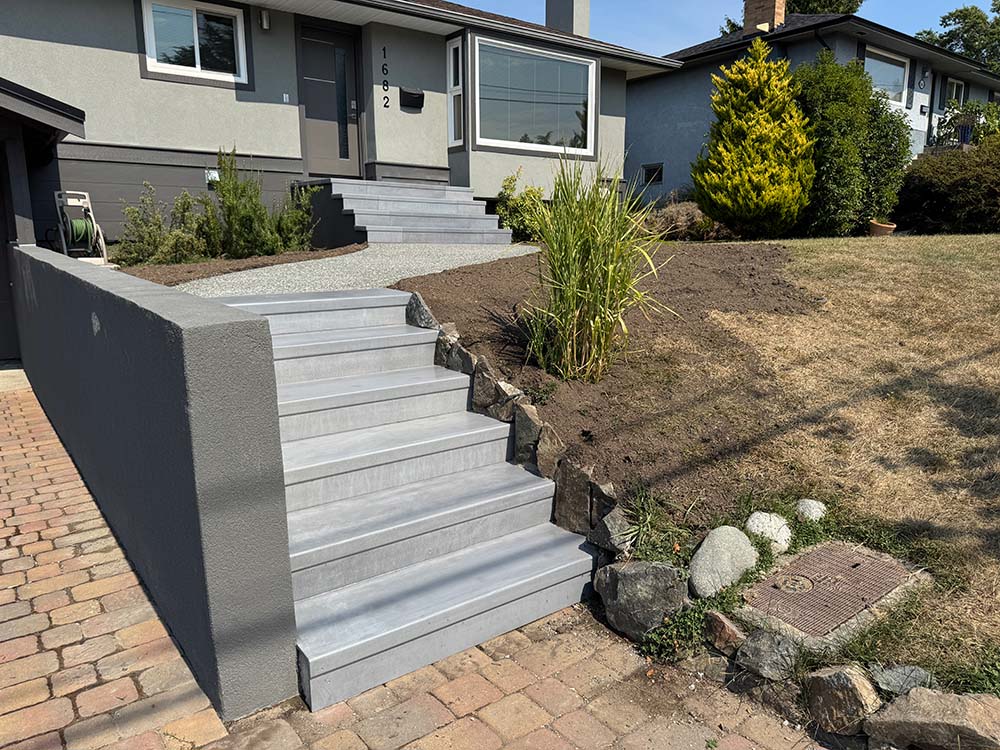
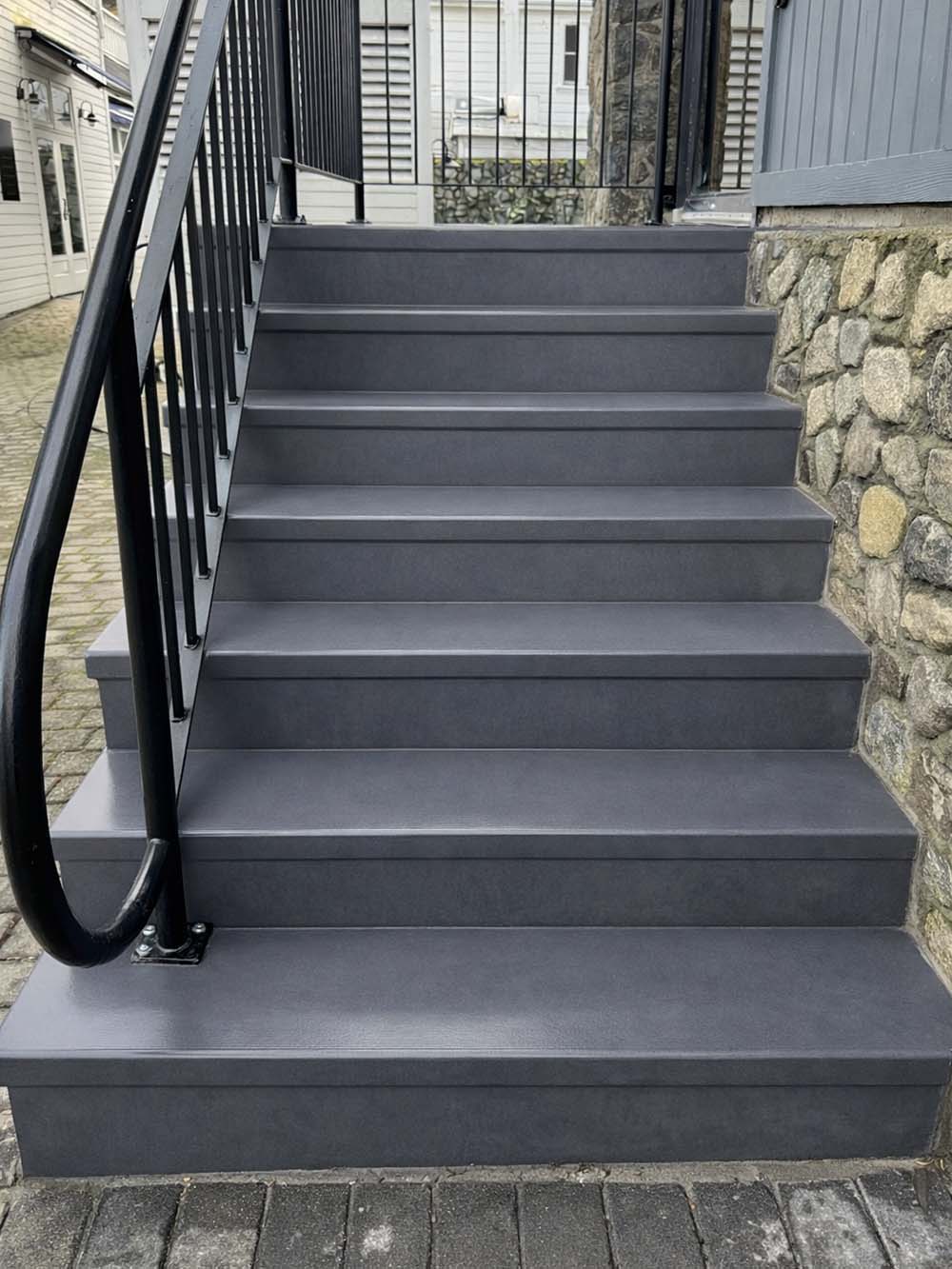
StepClad is not a coating and it’s not a thin resurfacing layer. It’s a purpose-built cladding system designed to permanently cover and protect deteriorating concrete stairs.
Designed and manufactured on Vancouver Island, StepClad is produced using ultra-high-performance concrete (UHPC), a material known for its density, strength, and long-term durability.
Compared to conventional concrete, UHPC is:
- Waterproof at just ½ inch thick
- Non-corrosive
- Highly resistant to surface breakdown
- Extremely dense and impact-resistant
- Built to perform in harsh freeze/thaw climates
StepClad installs over existing steps, encapsulating the deteriorating concrete beneath while creating a clean, architectural finish.
Before
After
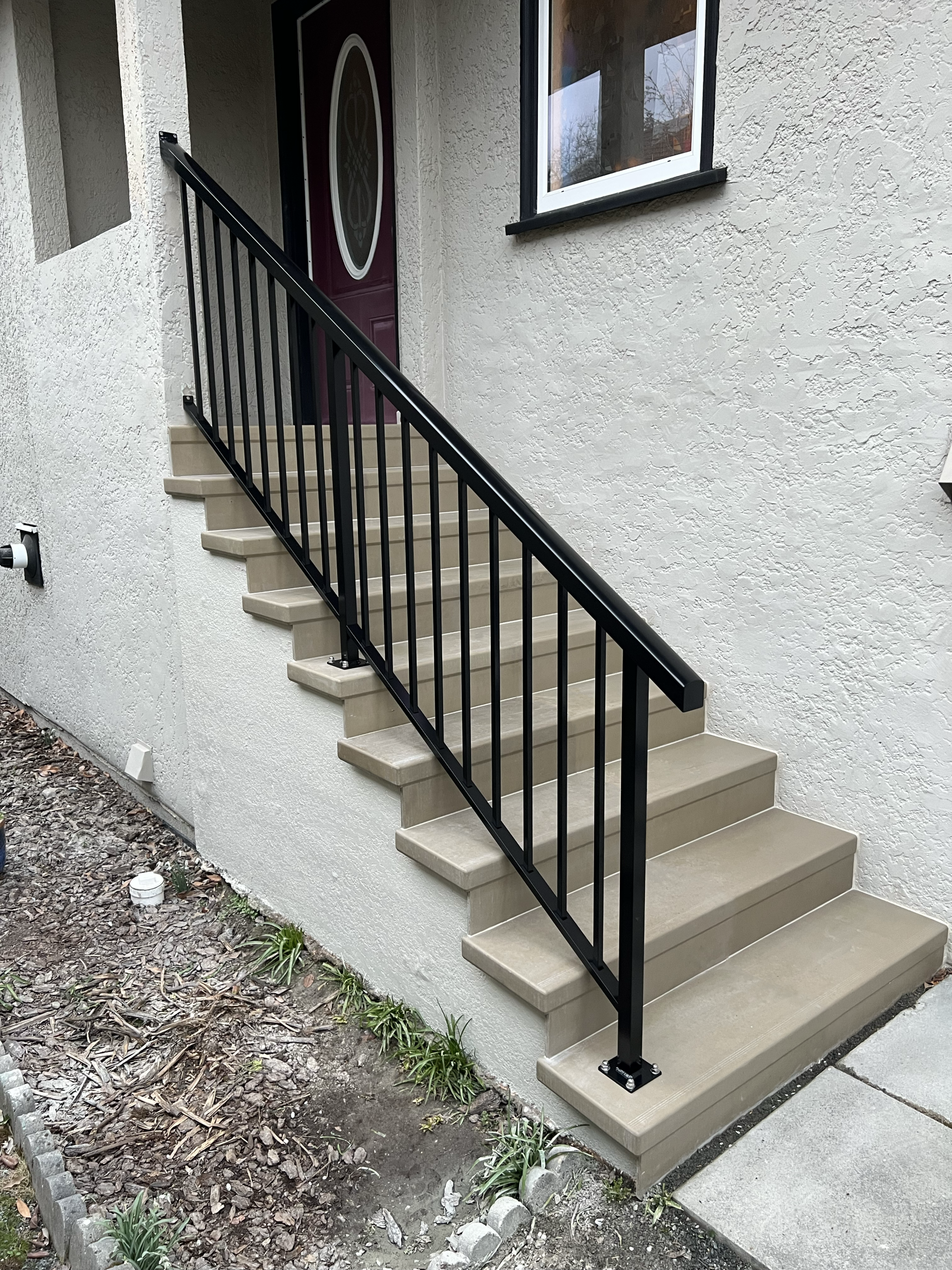
Engineered for Code Compliance & Long-Term Protection
StepClad is engineered to meet building code requirements for tread depth, riser height, and slip resistance. Integrated tactile strips improve visibility and safety, making the system suitable for residential, multi-family, and commercial applications.
Each unit features a 2-inch architectural profile with built-in overhanging drip edges that direct water away from the face of the stair assembly. Because the drip edge is integrated into the design, there is no need for additional surface-mounted flashing.
The result is a clean, durable system that upgrades both the performance and appearance of your entry.

Masonry for Vancouver Island, BC
Your home should work in unison, each space and/or structure should transition, flow and function fluently from one space to another. From functionality to aesthetics, we consider how each application and installation will affect the other.

(250) 217-2020
Visit Us
Location
1280 Glenshire Drive
Victoria BC, Canada V9C 3W7
Say "Hi!"
info@orcamasonry.com
Call Us
Phone
250·217·2020